
Coma to 5k.
Not a marathon. Not a sprint. A minor success on the road (run) to recovery, and notes on having “the resting heart rate of an olympian”.

I assume you’re familiar with the Couch to 5k craze?
This covid-centric, mass appeal, BBC-backed cultural phenomenon features famous faces from the telly/radio encouraging you every step of the way.
You’ve probably even tried it. Completed it. Celebrated it. Then restarted again three years later after a particularly heavy December.
It’s a mechanism cannily designed to inspire those of us with cripplingly low levels of self-motivation to get off our arses and champion a feat of exercise almost anyone should be able to do.
It’s not a marathon. It’s not a sprint. It’s a gentle jog and nothing more. And you have NINE WEEKS to do it. Christ.
This is yet another area of my life where the infantilisation of human capability is distilled to a sticker reward chart akin to something a three year old gets at nursery for not hitting another child. The bar is so low that it’s barely even visible.
Part of my route to rehabilitation, and returning to my ‘old self’, involves stepping over this embarrassing bar and cheering myself on when I reach the other side, unscathed. In short, it’s profoundly disappointing, lacklustre, and underwhelming.
Right, pre-amble done. Here’s how I stepped over that pathetic little bar to complete a continuous 5km run after a near death brain bleed and three week coma.
What’s your excuse?
The electrocardiogram
Behind a paper thin blue crinkle curtain at Guy’s and St Thomas’, an ECG spat out a score of 48.
When I handed the results over to the doctor she looked at me, glanced down at the numbers, and back up to meet my eye. Then said with a big, toothy, sarcastic smirk:
Michael Phelps-esque!
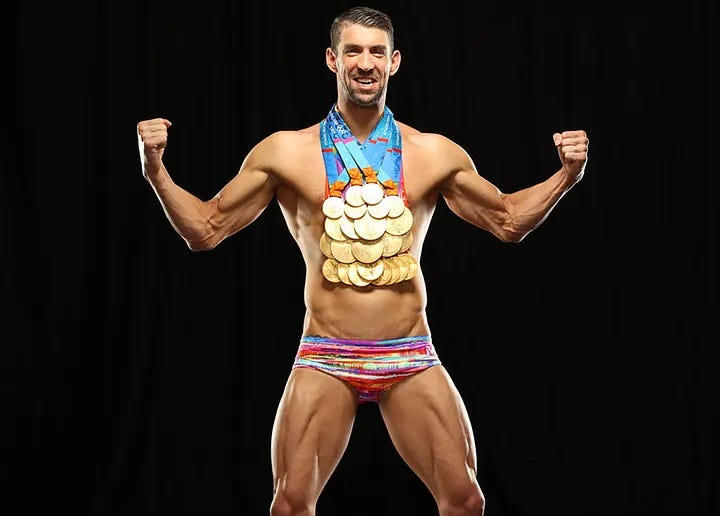
A few moments earlier I had been shirtless in front of a group of people I’d never met, with stickers and wires all over me, in a place I have significant heebie jeebies about: hospital.
So 48bpm was surprisingly zen.
Like the great game of golf, I assumed a low score was good. But was it too good? Too sedentary?
Less olympian, more brain damaged sloth.
The British Heart Foundation reckon that a normal resting heart rate for men is typically 60 to 100 beats per minute (bpm). Yet no one seemed too perturbed by my lackadaisical cardiovascular output. I asked:
Is this the root cause of my vertigo? My fatigue?
Nope. The consensus is that my heart isn’t the culprit behind the spins. Instead, it’s something called unilateral vestibular hypofunction. Spin around on the spot and say that five times fast.
Yep. My inner ear is on the wonk, thanks to The Big Bump of ‘23.
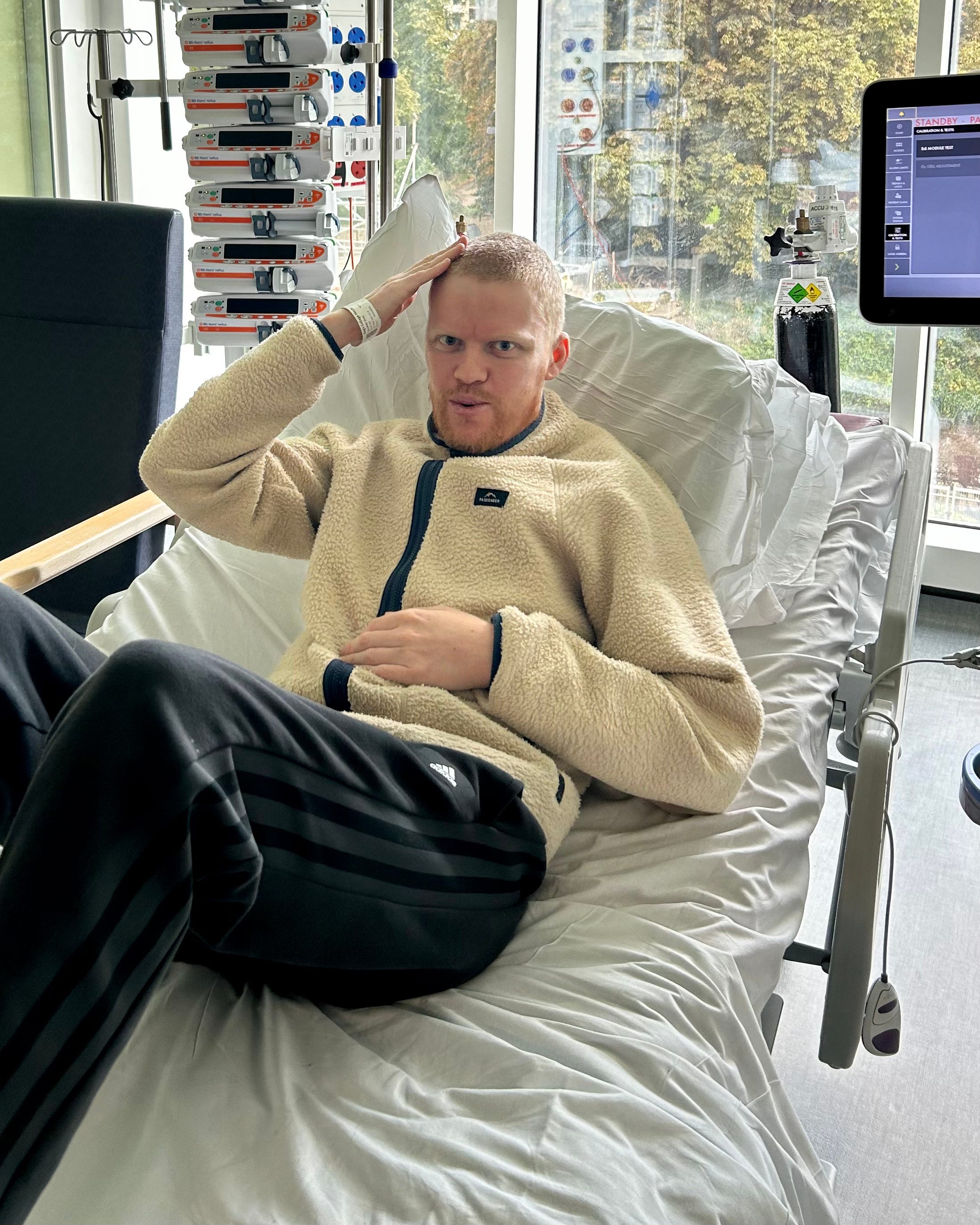
Anyway, there’ll be space for hardcore cochlea deep dives another time. Back to my olympian’s ticker and the journey from coma to 5k…
Running/Planning
The road to TBI recovery isn’t straightforward.
Much like just about everything else worth having, it requires practice, persistence, perseverance and positivity — even if you have to lie to yourself, repeatedly, to achieve that final p.
To fight the fatigue, and to slowly chip away at the vertigo, my NHS physio pulled together a weekly plan of incrementally tougher runs (starting from a paltry 1km) and a handful of YouTube workouts.
As ever, this stuff ain’t rocket science, or brain surgery. But accountability is a hell of a drug. And I’m crap at lying. So those monthly physio check-ins were much more stick than carrot.
To help set the scene: my idea of exercise is a daily dog walk; and I don’t have access to a home gym or a membership at some sweaty dungeon with mirrors on every vertical surface.
The sportswear in my cupboard consists of old West Ham shirts, and I was cut out of the only lycra I owned in the back of the ambulance. I never did get my cycling jersey back — but I did get the sliced shorts, and my mildly hexed helmet.


Happily, resistance bands are perfect for a guy who refuses to order weights from the internet or, worse, buy them in an actual shop from a real person. How embarrassing. Doing shuttles back and forth from the car park because you can’t carry them all at once. Awful.
Happier still, YouTube is full of people wearing intact lycra onesies who will gleefully bark orders at you for 10-15-20 minutes as you desperately try to not let go of the supersized rubber band at full stretch when shimmying over to hit SKIP on an advert for Squarespace so you don’t have to explain how you gave yourself a black eye.
That would be embarrassing.
Breathless embarrassment
But we’re here to talk running. You know what running is:
No equipment.
Achievable.
Virtually anyone can do it.
However! There’s an elephant in the room with us.
Running — as a grown up — is embarrassing.
Running slowly — at a bouncy walking pace — is embarrassing.
Having to stop to catch your breath — whilst wearing little shorts — is embarrassing.
Being overtaken by a fellow jogger, who is raw-dogging the experience with no headphones — just them and their inner monologue — is embarrassing.
Having a target time in mind — which you used to be able to do pre-coma — and then not achieving that time on your first 5km run in five years is… reasonable? Nope, still embarrassing.
But my running regimen was not focused on PBs, distance, cadence, style or happiness. It would be judged on how long I could sustain a higher heart rate, whilst hauling my usually torpid frame through the same Kentish countryside where I smashed my skull into seven pieces and sunk into a three-week coma.
The best bit about an exercise ‘plan’ like this is that you don’t even need to keep checking your watch for a precise bpm reading. You just have to be brave enough to talk, or sing, to yourself and the odd sheep to test the theory; properly basic stuff.
It goes a bit like this:
LOW LEVEL:
You can talk and sing without puffing at all.
MODERATE INTENSITY:
You can comfortably talk, but not sing.
VIGOROUS INTENSITY:
You can’t say more than a few words without gasping for breath.
I told you this isn’t brain surgery. But maybe, with a fair tailwind, this is a simple, actionable, achievable building block towards eventual recovery from literal brain surgery.
Less embarrassing, more optimisticmaxxing.
Although I still refuse to download Strava.
Completed it, m8
My first coma to 5k completed, after a few 2-3k runs to prove my capabilities to myself, I eventually surpassed that benchmark time.
The target was a nice, round, not-so-gentle, moderate-to-vigorous, 30 minutes. I managed it in:
⏱️ 29mins, 11seconds
But who’s counting?*
Target achieved, point proven, heart rate sufficiently in the moderate-to-vigorous nether regions, we now occasionally run as a team of four (x2 humans, x2 sighthounds), too.
Should I ever drift into dangerously positive, over-confident waters, it’s reassuring to know that a sighthound’s brisk walk is directly comparable to a human’s swift jog.
There are no marathons on the horizon, but more time with the dogs and Holly, in whatever form that takes, is enough for me.
CUTE!
Notes:
*Well, me. Obviously.
NHS physios are great value head therapists. They’re funny, interesting, knowledgeable and they offer SOLUTIONS to life’s problems. How quaint. Truly, better help than BetterHelp could ever dream of.
We’ve just finished all three series of Big Boys of Channel 4, in a 10-day omnibus, and it’s the best thing I’ve watched so far this year: friendship, grief, coming of age angst, cultural references galore, and multiple Big LOLs per episode. The perfect kind of quick fire sitcom I dream of writing.
And finally, on the Strava point. I’m basically too old, too tired, too dizzy and too injured of brain to be among the first conscripts in the War of the AI Drones. So that’s good, I suppose.